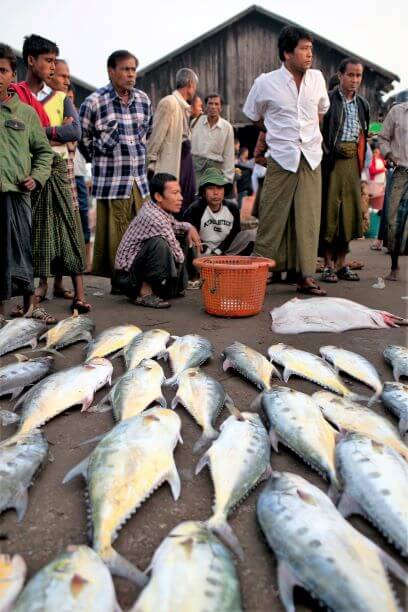
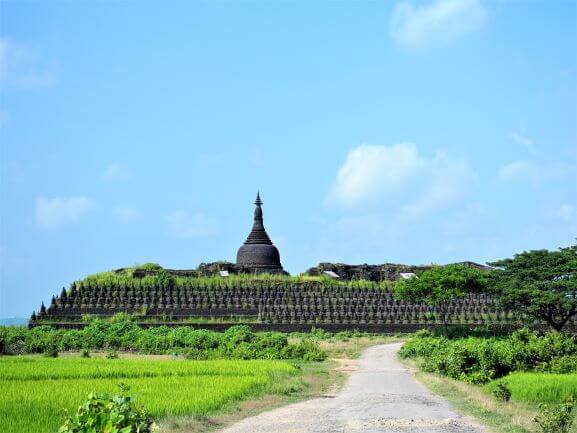
(B) Mrauk U This morning, visit Mrauk U’s market and observe the flow of rural life before exploring the Archaeological Museum, featuring various inscribed stones, Buddha icons of Rakhine, artefacts from Vesali, and many other items. We’ll proceed to Koe-thaung Pagoda (Temple of 90,000 Buddha Images), the largest of Mrauk U’s temples. According to legend, Koe-thaung was largely destroyed by lightning because its builder, King Min Dikkha, wanted to outdo his father with the construction of a temple containing 90,000 images of the Buddha, as opposed to the 80,000 of his father’s temple, Shittaung Pagoda. Archeologists believe instead that construction quality of the temple is inferior compared to other temples in Mrauk U because of the very short construction period and the building materials used (more brick than sandstone). Close by on a hill is Pisei Pagoda. Continuing, we’ll visit Lattsaykan Lake (the Royal Handwashing Lake), Mrauk U’s main reservoir of fresh water. Legend has it that if enemies penetrated the city, the waters would be released, drowning the invaders. Break for lunch. This afternoon you’ll resume your exploration of Mrauk U at Bandoola Kyaung Monastery, containing priceless donated jewels and Buddha images. Then proceed to Sakya Man Aung Pagoda (1629), guarded by a couple of half-kneeling, painted giants. Continue to the bell-shaped Bodi Shwegu Temple, the inner walls of which are decorated with stone sculptures depicting some of the 550 Jatakas (stories of previous lives) of Buddha. These sculptures are like the mirrors of Rakhine’s culture. See also Pitakataik (library) which was used as a depository for Buddhist scriptures in ancient times. Sunset at Harritaung Hill. Overnight at Mrauk U.